Lake Bled Wedding Timeline: How the Day Naturally Flows
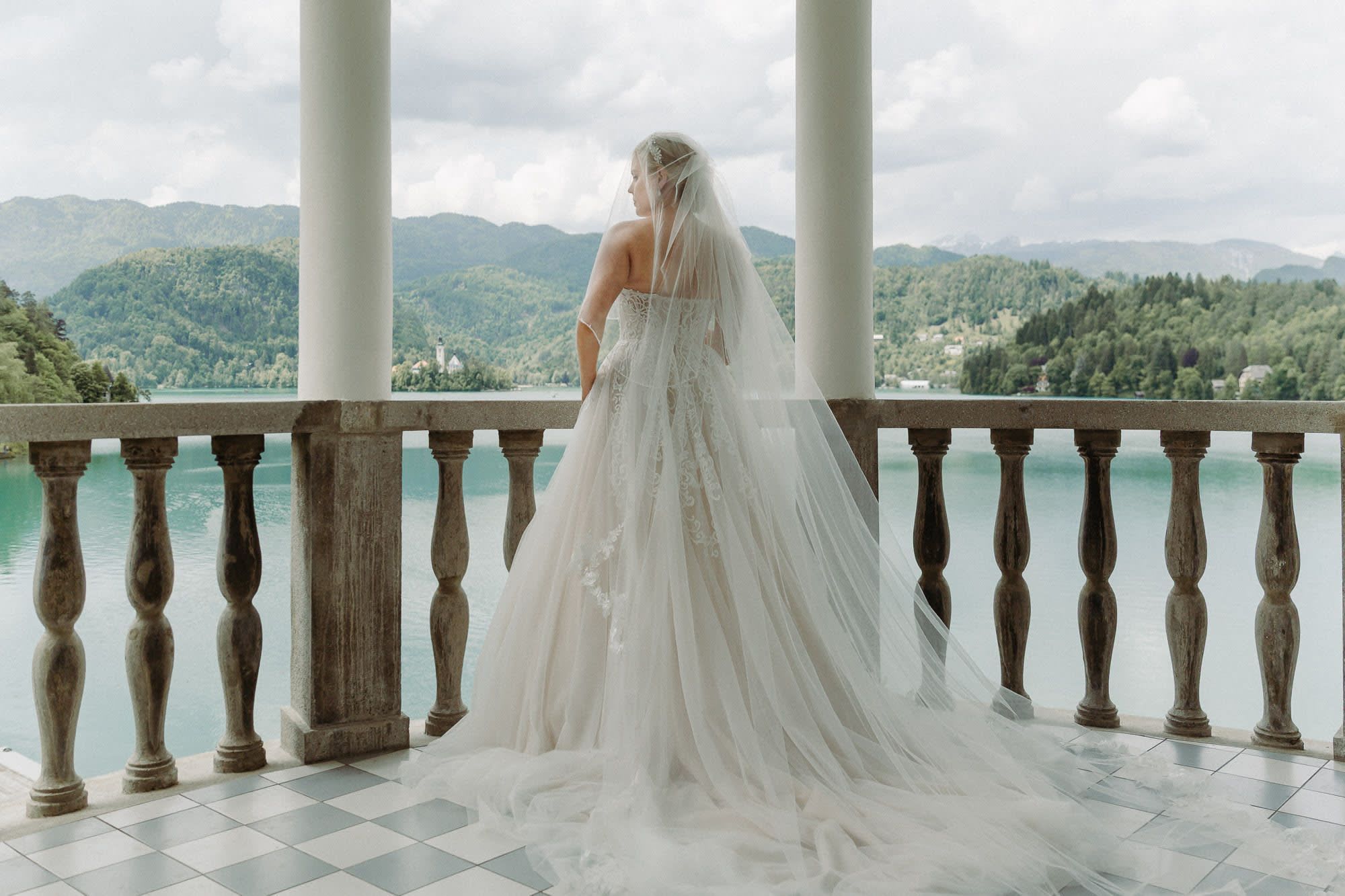
Understanding how a Lake Bled wedding day unfolds
One of the most common questions couples have when planning a wedding at Lake Bled is simple:
How does the day actually flow?
The setting is unique. There are multiple possible locations — the lake, the island, the castle, nearby hotels — and each part of the day interacts with light, movement, and timing in a slightly different way.
Rather than following a strict schedule, most Lake Bled weddings work best when the timeline is built around a natural rhythm.
This guide walks through a typical structure of the day — not as a fixed formula, but as a way to understand what tends to work well in practice.
A natural structure of the wedding day
While every wedding is different, most days at Lake Bled follow a similar flow:
- —Preparation
- —First look or meeting
- —Travel to ceremony location
- —Ceremony
- —Short transition / quiet moment
- —Couple portraits
- —Reception and evening
The exact timing depends on the season, the chosen locations, and how relaxed or structured you would like the day to feel.
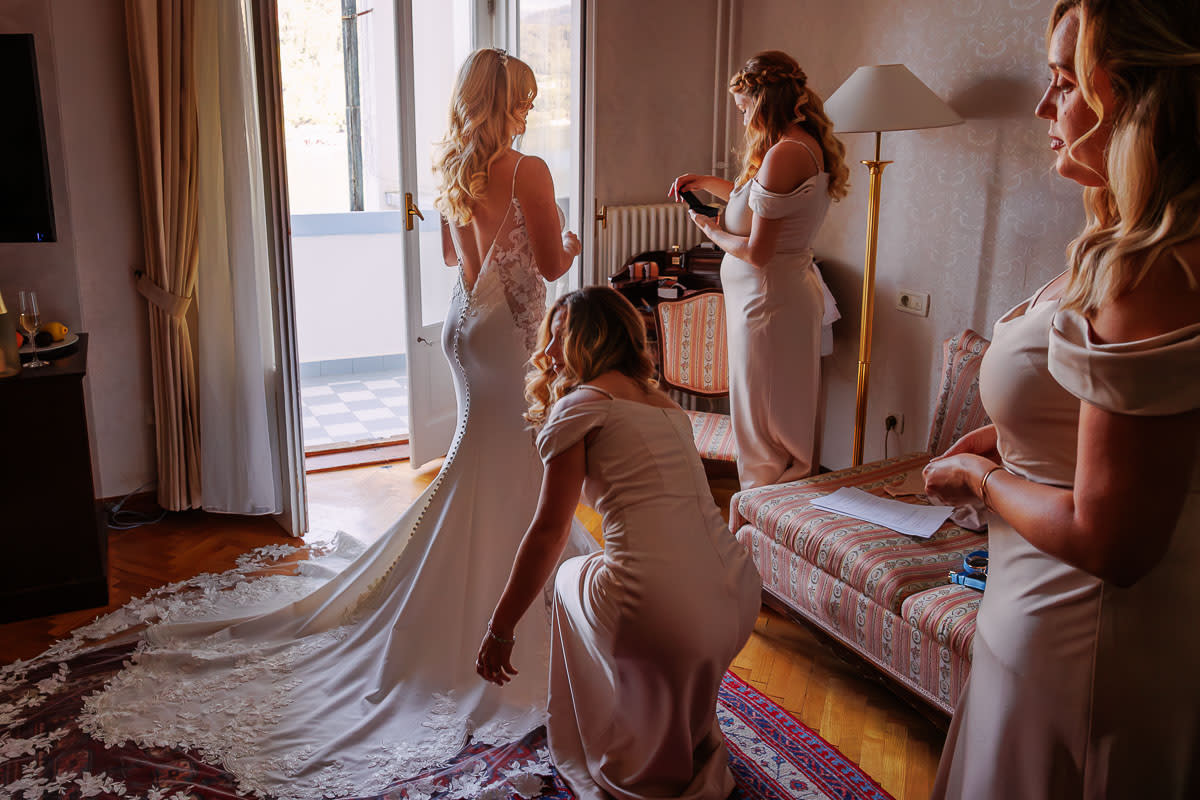
Morning preparation
The day usually begins in a hotel or nearby accommodation.
This part of the day tends to be quieter and more personal. It’s a time for getting ready, spending time with close family or friends, and easing into the atmosphere of the day.
From a photography perspective, this is where many natural, unposed moments happen — small interactions, anticipation, and details.
At Lake Bled, it is worth choosing a space with:
- —good natural light
- —enough room to move comfortably
- —a calm environment
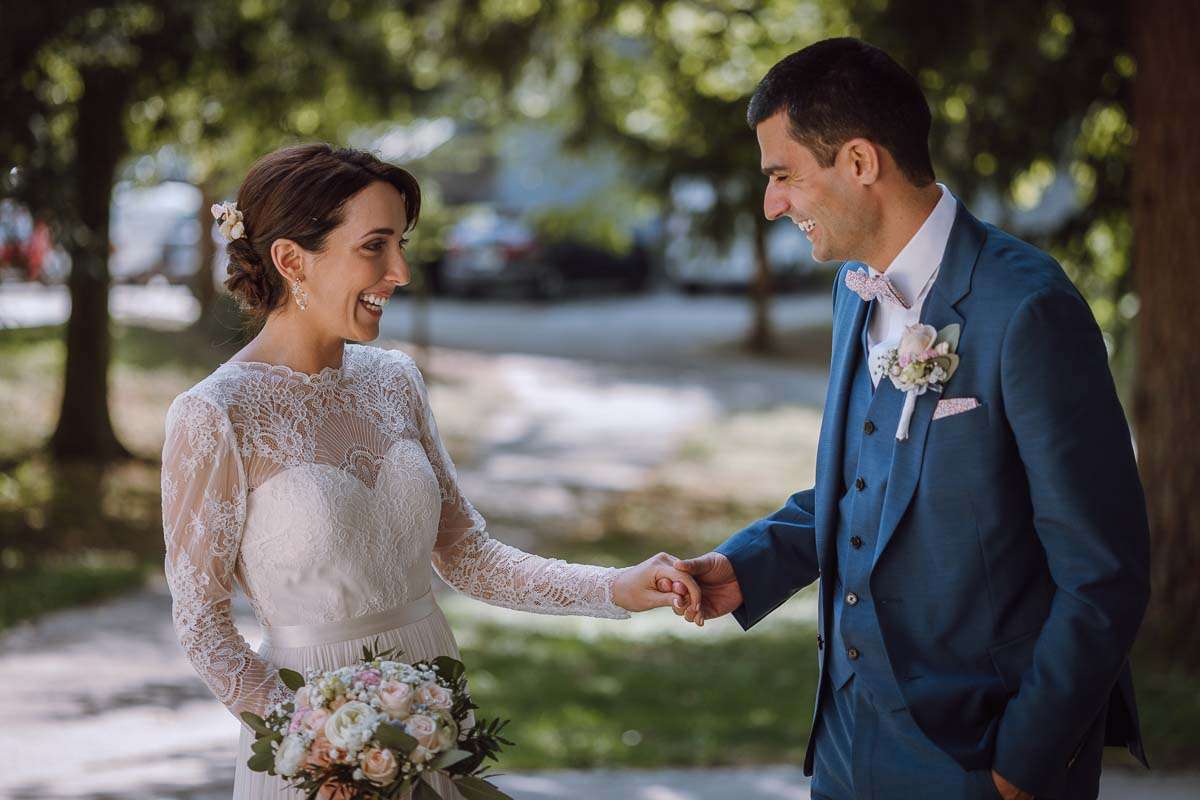
First look or meeting
Some couples choose to meet before the ceremony, while others prefer to see each other for the first time during the ceremony itself.
There is no single correct choice — it depends on how you want the experience to feel.
A first look can:
- —create a quiet, private moment together
- —reduce time pressure later in the day
- —allow for more flexibility in the timeline
Waiting until the ceremony can:
- —make the moment feel more traditional
- —build anticipation
- —keep the structure simple
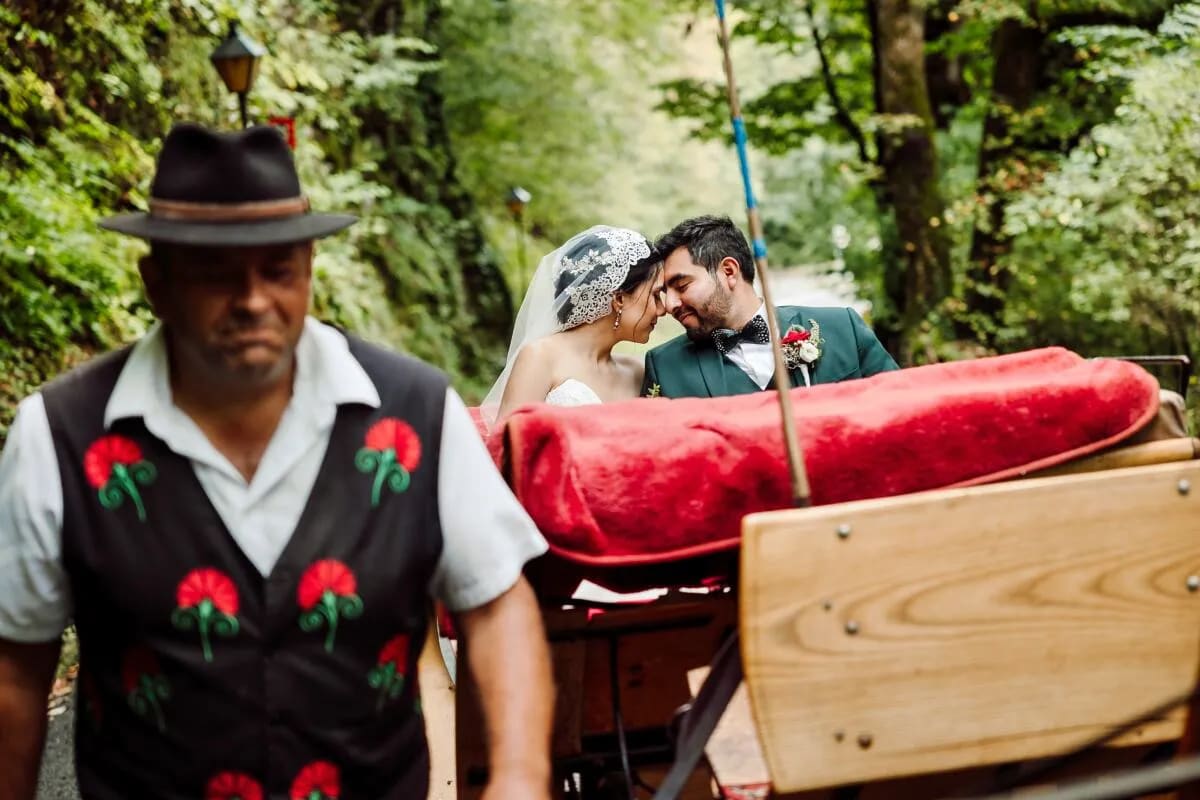
Moving between locations
At Lake Bled, movement is part of the day.
You may:
- —walk along the lakeside
- —travel by car between locations
- —take a traditional boat to the island
- —move from the lake to the castle
These transitions take time and should be part of the plan, not treated as something separate.
A well-paced timeline allows for:
- —calm movement
- —small pauses
- —space to enjoy the surroundings
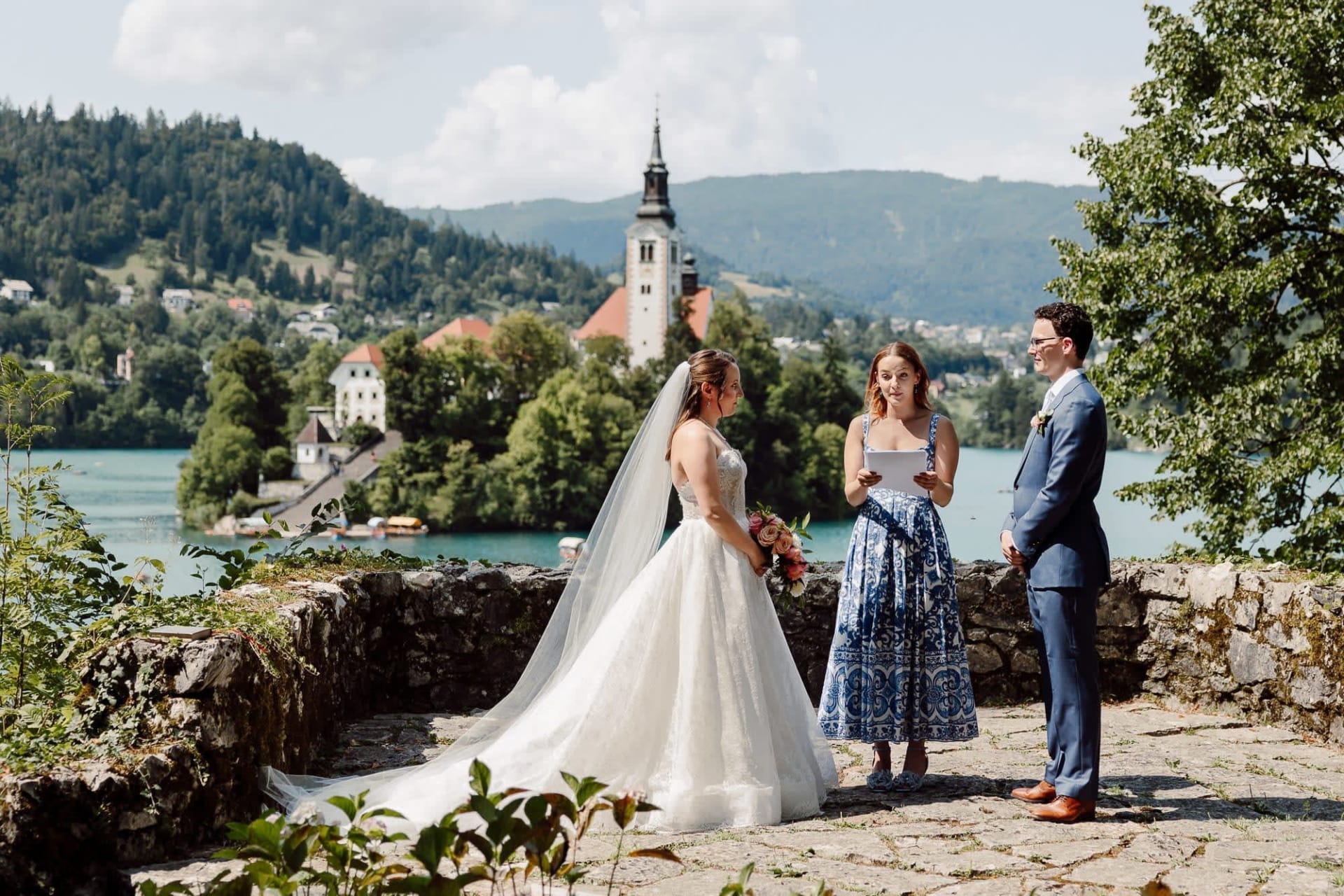
The ceremony
The ceremony is the central moment of the day.
At Lake Bled, it often takes place:
- —at Bled Castle
- —on the island
- —at a lakeside location
- —at a hotel or private venue
The timing of the ceremony has a strong influence on the rest of the day, especially in relation to light.
For example:
- —earlier ceremonies create more flexibility afterward
- —later ceremonies can align with softer evening light
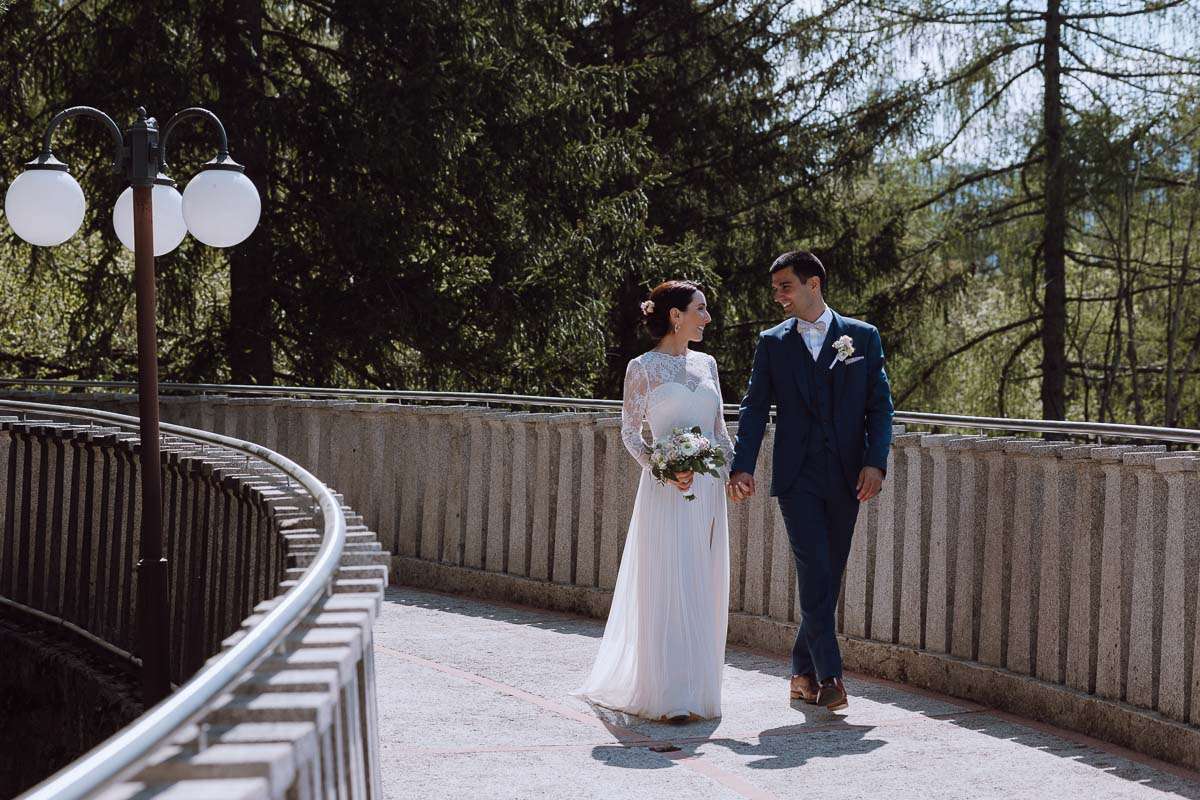
A short pause after the ceremony
One of the most overlooked parts of the day is the moment immediately after the ceremony.
Rather than moving quickly into the next activity, it often helps to allow a short pause.
This can be:
- —a quiet moment together
- —a short walk
- —a few minutes away from the group
It gives space for the experience to settle and often leads to more natural transitions into the rest of the day.
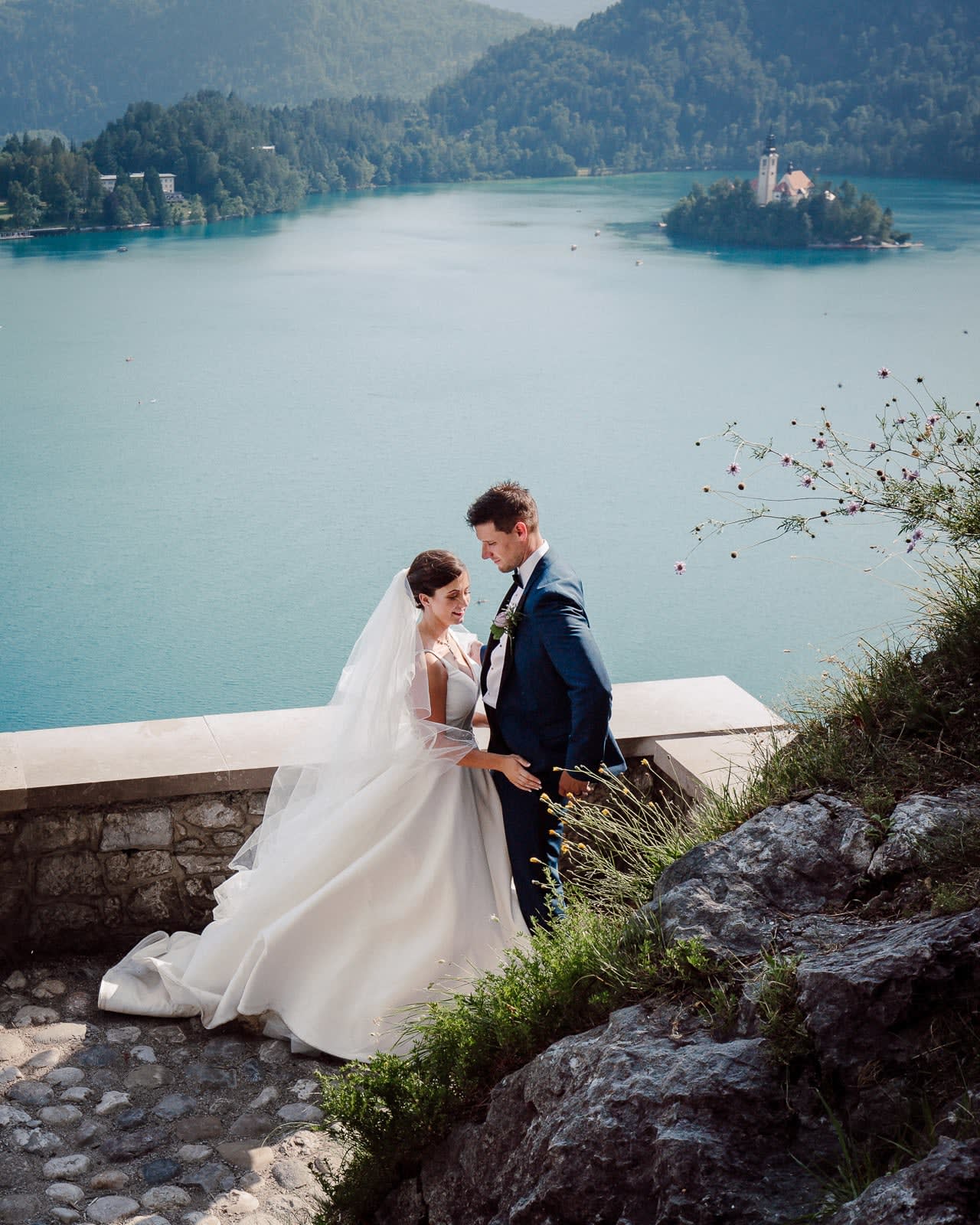
Couple portraits
At Lake Bled, portraits are usually taken shortly after the ceremony or in the late afternoon.
This is when the location plays a particularly important role.
Common choices include:
- —viewpoints overlooking the lake
- —castle terraces
- —quieter lakeside paths
- —short boat moments
The best results often come from allowing enough time without rushing, while still keeping the experience relaxed.
If you are curious how this translates into actual photography, you can explore that here:
👉Lake Bled Wedding Photographer

Reception and evening
The second part of the day becomes more social and relaxed.
This may include:
- —drinks and mingling
- —dinner
- —speeches
- —first dance
- —evening celebration
At this stage, the timeline usually becomes less structured, allowing the atmosphere to develop naturally.
The role of coordination
Behind the scenes, a well-structured timeline is often the result of careful coordination.
When a wedding planner is involved, they typically guide:
- —timing
- —transitions between locations
- —communication with vendors
This helps the day flow smoothly without feeling rigid.
If you are considering working with a planner, you can read more about that here:
👉Working with a Wedding Planner at Lake Bled
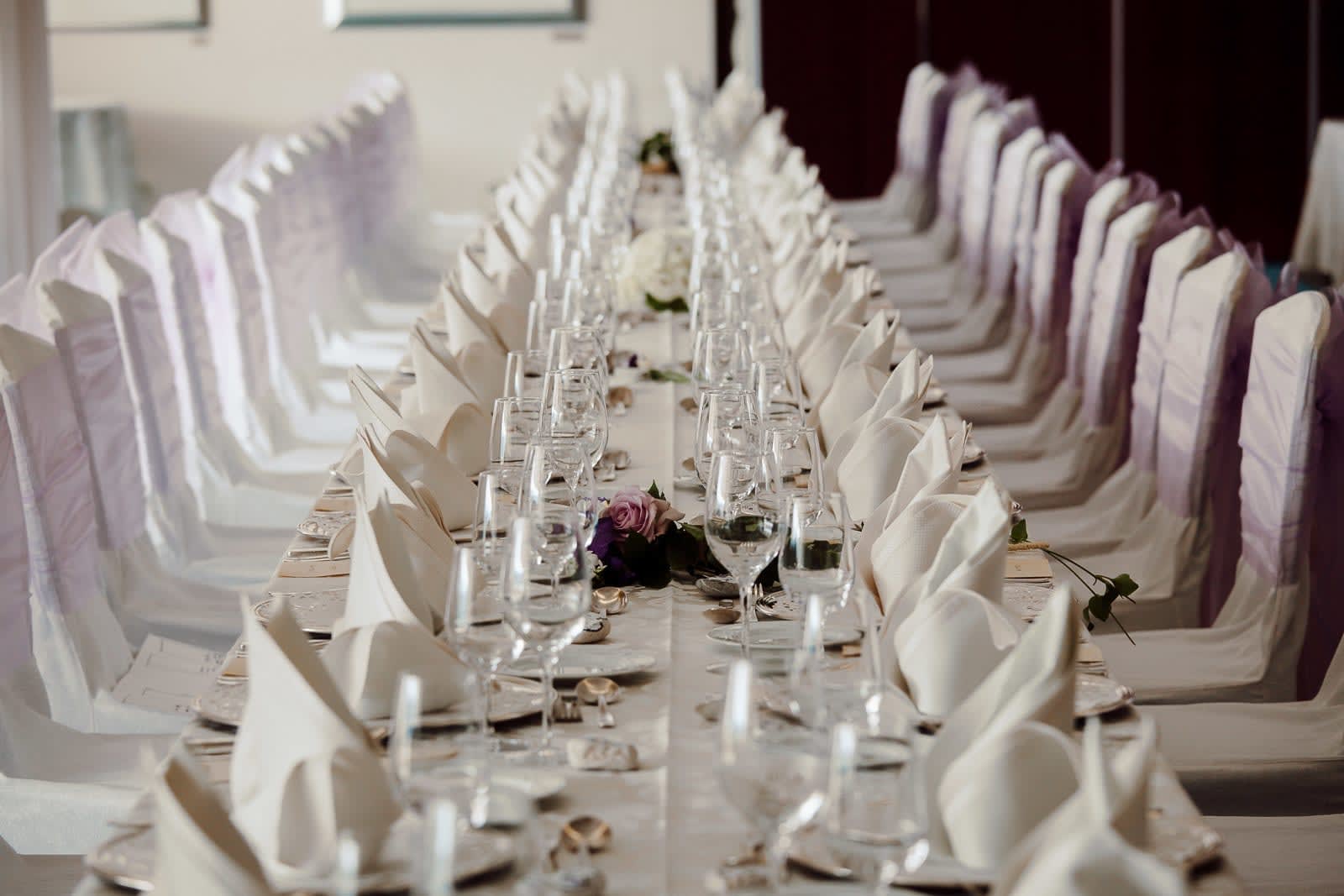
Finding the right balance
The most successful timelines are not the most detailed ones.
They are the ones that:
- —allow space
- —avoid unnecessary rushing
- —adapt to the natural rhythm of the day
At Lake Bled, this often means balancing:
- —structure and flexibility
- —planning and spontaneity
- —timing and atmosphere
A gentle next step
If you are starting to plan your wedding at Lake Bled, it can help to first understand the overall structure of the day, and then refine the details from there.
You may find this a useful starting point:
👉Lake Bled wedding guide
And if you would like to see how these timelines translate into real wedding coverage:
👉Portfolio