Julian Alps Elopement: Places, Seasons and Cost
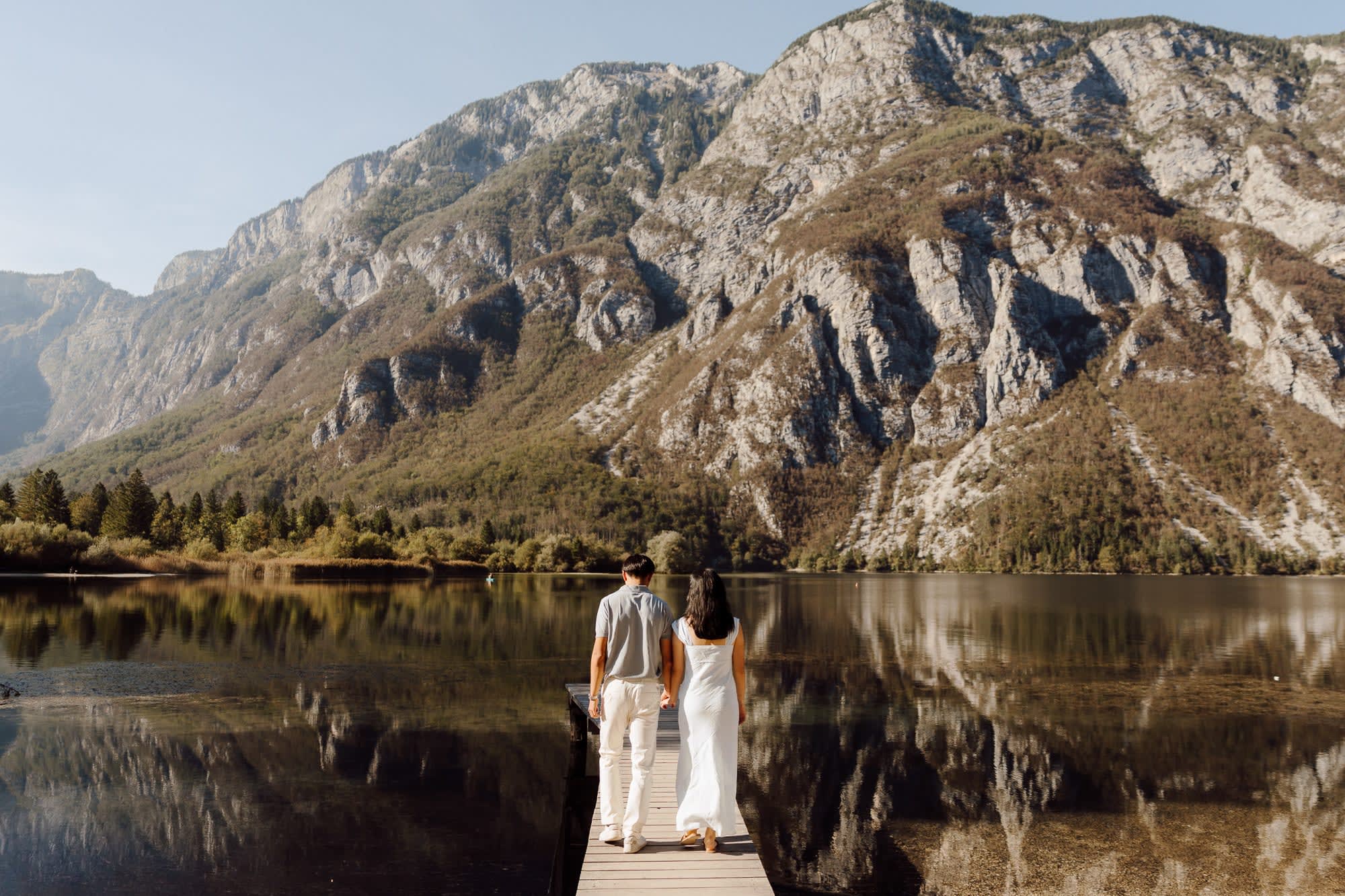
A Julian Alps elopement asks for different planning from a day at Lake Bled. The mountains are close, and many of the couples who write to me want both, but the high places have their own seasons, rules and distances that are easy to underestimate from abroad. This guide covers the practical side: where to go, when each place is realistically open to you, what Triglav National Park allows, and what the photography costs. For how these settings feel and how I photograph them, my Slovenia elopement photographer page is the better starting point.
Where can you elope in the Julian Alps?
The Slovenian Julian Alps give you four distinct settings: Lake Bohinj, the high road over Vršič Pass, the Soča Valley, and the alpine meadows of Triglav National Park. Each one suits a different kind of day, so the choice usually comes down to how much walking, altitude and weather exposure you want.
Lake Bohinj
Lake Bohinj is the largest permanent natural lake in Slovenia, and it lies inside Triglav National Park. It keeps the water-and-mountains character that draws couples to Bled, within the protection of the national park.
Vršič Pass
Vršič is the highest mountain pass in Slovenia, at 1,611 metres. It is the setting for couples who want the peaks themselves in the photographs rather than seen from below.
The Soča Valley
On the far side of Vršič, the road continues down towards Trenta and the Soča River, where the water gives the day movement and colour rather than stillness. It suits couples who picture their elopement as part of a longer journey through Slovenia.
Alpine meadows in Triglav National Park
Meadows below the peaks are the quietest of the four, and they are the ones that depend most on walking access and on the park's rules, which are covered below.
Is Lake Bohinj a quieter alternative to Lake Bled?
Lake Bohinj is the closest alternative in character: an alpine lake with mountains rising from the water, set within the national park. For couples who want water in their photographs but not Lake Bled itself, it is the natural first place to look.
What rules apply to an elopement in Triglav National Park?
Most of the Julian Alps settings in this guide lie within Triglav National Park, and its rules shape the plan. Drones are prohibited in the natural environment without the park's prior consent, and driving, stopping and parking are not permitted there either.
In practice, that means two things. Aerial footage should not be assumed for a mountain elopement, and the walk from the nearest permitted parking to the ceremony spot needs to be planned in wedding clothing before the day, not discovered on it. The same code asks visitors to keep to marked routes and forbids open fires, which rules out any open flame as part of a meadow ceremony.
When is the best season for a Julian Alps elopement?
Late May to October is the realistic window for most of the Julian Alps, because that is when the high meadows are accessible and the highest road is reliably open. Vršič is closed to all traffic during winter conditions, so any plan that depends on the pass should sit comfortably inside those months.
Lower settings behave differently. According to the national park, Lake Bohinj can be frozen in winter and its surface warms to 24°C in summer, which makes it the one Julian Alps setting worth considering for a winter elopement.
Season | What to expect | Best suited to |
|---|---|---|
Winter | Vršič closed in winter conditions; Bohinj may be frozen | Couples who want snow and stillness at the lake, with a flexible plan |
Spring | High places still depend on late snow until around late May | Lake Bohinj and valley settings |
Summer | Every setting open; the warmest water | Vršič, meadows and early-morning lake ceremonies |
Autumn | High places generally accessible into October | Couples who want colour and are comfortable with shorter days |
Can you combine Lake Bled and the Julian Alps in one elopement?
Yes, and for many couples it is the most complete way to do it: Lake Bled on one day, the mountains on the next, in whichever order the weather prefers.
How much does a Julian Alps elopement cost?
The photography for a Julian Alps elopement starts from €2,750 with The Two-Day Elopement Experience: up to six hours on the first day and three on the second, which can be Lake Bled and the mountains or two mountain days. Travel is charged separately for each day photographed, from nothing at Lake Bohinj to €150 for Kranjska Gora and the wider Julian Alps, and €300 for the Soča Valley.
Prices do not change with the season, and extra hours on the second day are €200 each. The package also includes planning both days together, scouting the route and timing, and, with a buffer day in your travel plans, moving the mountain day to the better weather where my availability allows.
Mountain days need more time than a lakeside morning, because the route has to be walked and the light waited for. That is why the mountain element sits on a second day rather than being squeezed into one.
Have you photographed weddings in the Slovenian mountains?
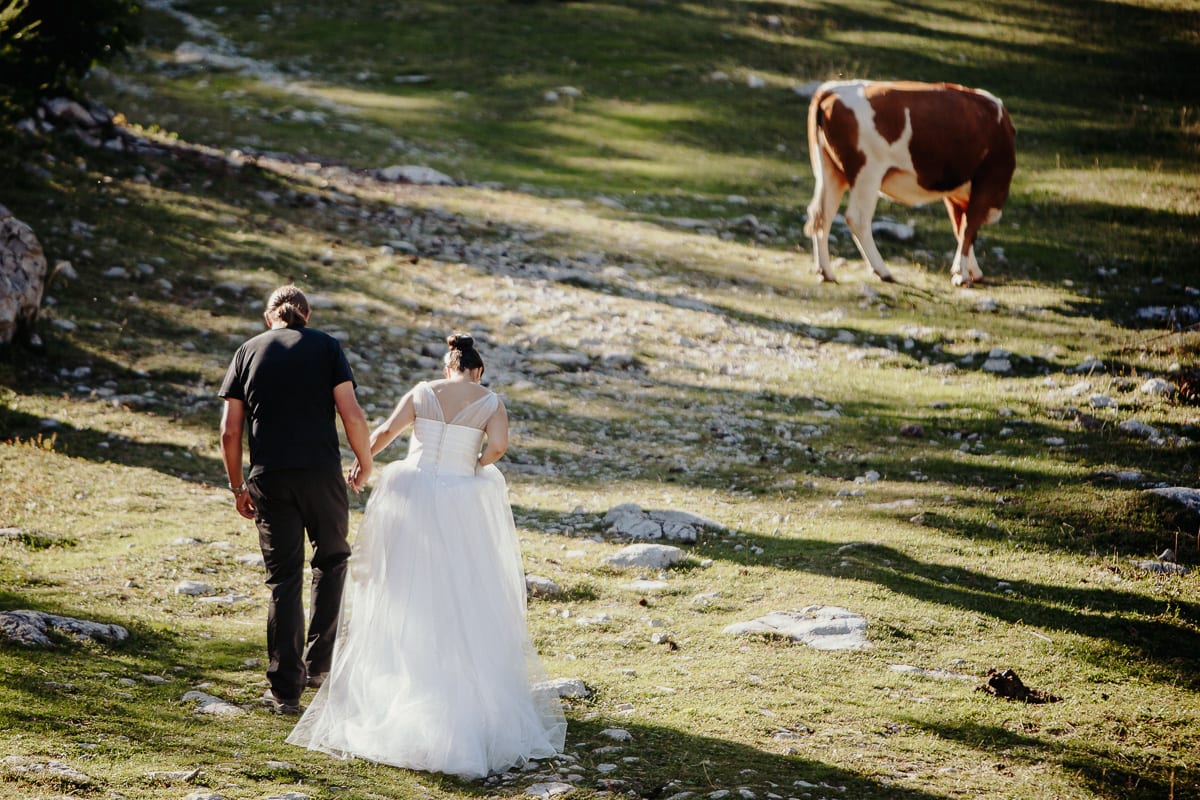
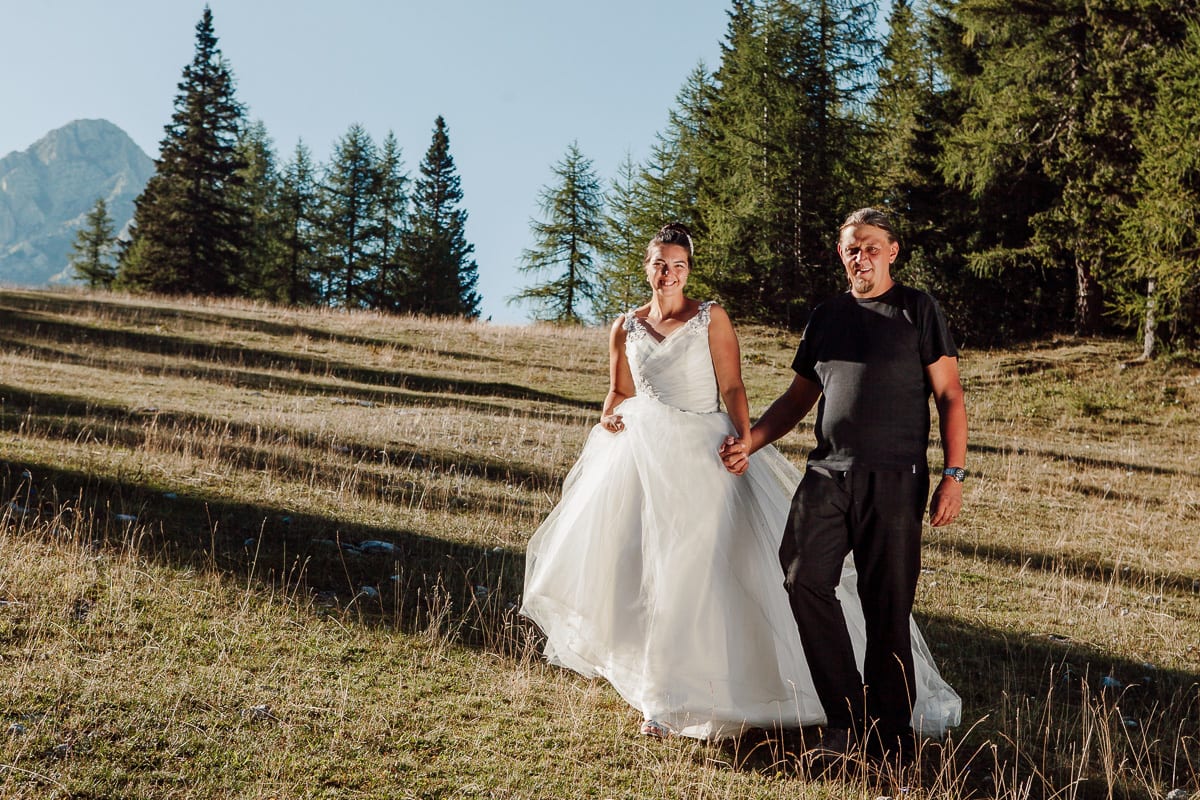
Yes: the wedding photographs on this page were taken at Zelenica, in the Karavanke, a different range from the Julian Alps but the same kind of day, with rocky paths, grazing cattle and light that changes by the hour. I do not yet have a full gallery from the Julian Alps themselves, and I would rather show you one honest mountain wedding than imply a larger mountain portfolio than I have.
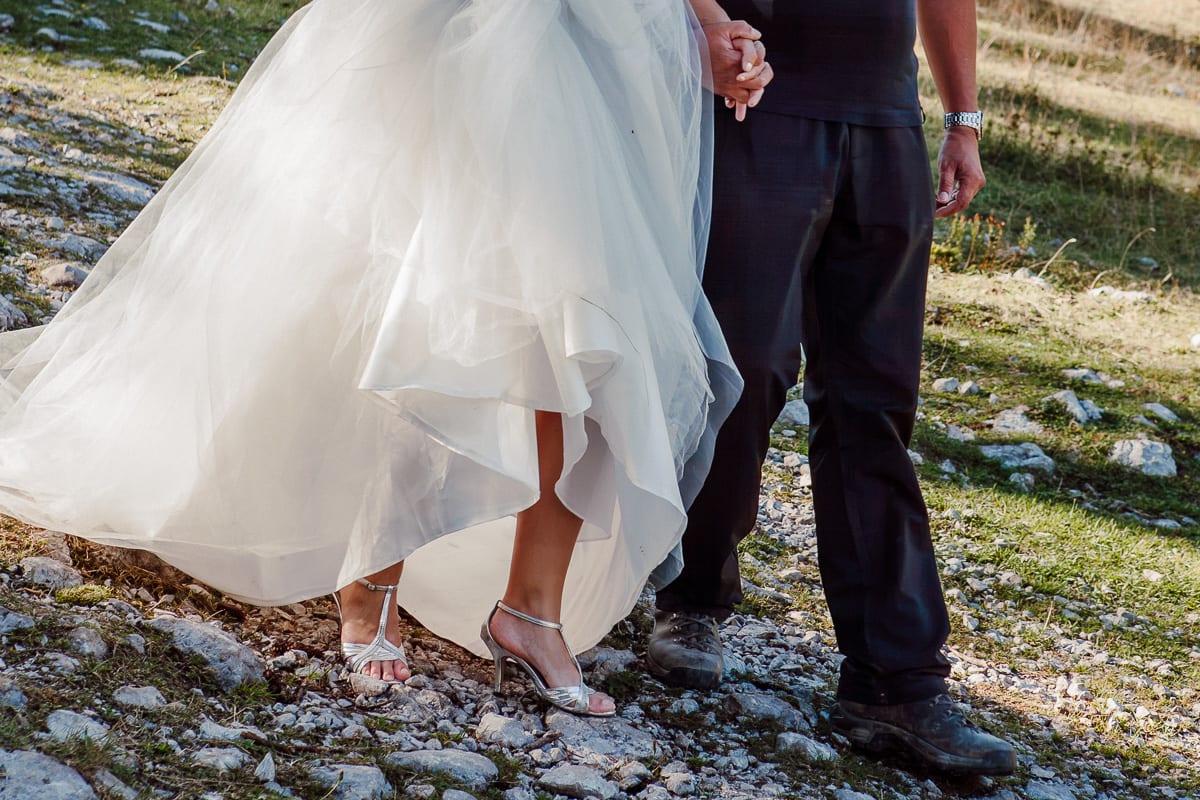
I love working in the mountains, though they ask more of a photographer than a lakeshore does. I carry a full set of equipment, and often some of the couple's belongings as well, up rocky paths. When we reach the final location, the effort repays itself: the views open out, and a deep quiet settles over everything.
What I bring to the Julian Alps is twelve years of photographing Slovenia in changeable alpine light, and a plan that is walked and weather-checked before the day.
How do we start planning a Julian Alps elopement?
Start with three things: your rough season, how far you are comfortable walking in wedding clothing, and whether Lake Bled belongs in the plan. Tell me what you are imagining, and I will reply within 24 hours with a written plan covering location, timing and a weather alternative. If you are still deciding whether the lake or the mountains suit you better, the one-minute quiz is a good place to start.
About the author: Damian Pristov is a solo elopement, wedding and proposal photographer based permanently at Lake Bled, Slovenia, with twelve years' experience and more than one hundred weddings photographed there. He personally plans most of the elopements and proposals he photographs, from location and timing to the practical details of the day. Read more about Damian.