How to Plan a Lake Bled Proposal (10 Practical Steps)

By Damian Pristov · Last updated November 2026
Thinking of proposing at Lake Bled?
The setting itself is already extraordinary. What shapes the experience is rarely how much you add, but how thoughtfully the moment is planned.
In short: planning a Lake Bled proposal comes down to ten decisions: where to propose, what time of day, whether to have it photographed, a believable cover story, one or two personal touches, transport, a weather backup, the balance between privacy and scenery, the ring itself, and what happens after the yes. Each is covered below.
This guide walks you through the key decisions — from choosing the right location and timing to handling logistics, privacy, and the flow of the day — so that the proposal feels calm, natural, and truly your own.
If you would rather plan the location, timing and logistics together with someone who lives at the lake, see my Lake Bled proposal planner and photographer page.
A well-planned proposal does not feel planned. It feels natural — as if everything simply fell into place.
Table of Contents:
Why is Lake Bled a good place to propose?
Because it offers both: strong, recognisable views and quiet, intimate corners within a short walk of each other.
You can choose something iconic and elevated, or something more understated and personal.
That flexibility is what allows each proposal to feel different, even within the same place.
1. Where should you propose at Lake Bled?
Choose by how you want the moment to feel rather than by how famous the spot is. Most proposals here take place in one of five settings.
- —Lakeshore: calm, accessible, and often the most natural feeling
- —Castle area: elevated views and a more defined setting
- —Bled Island: symbolic and traditional, with a sense of occasion
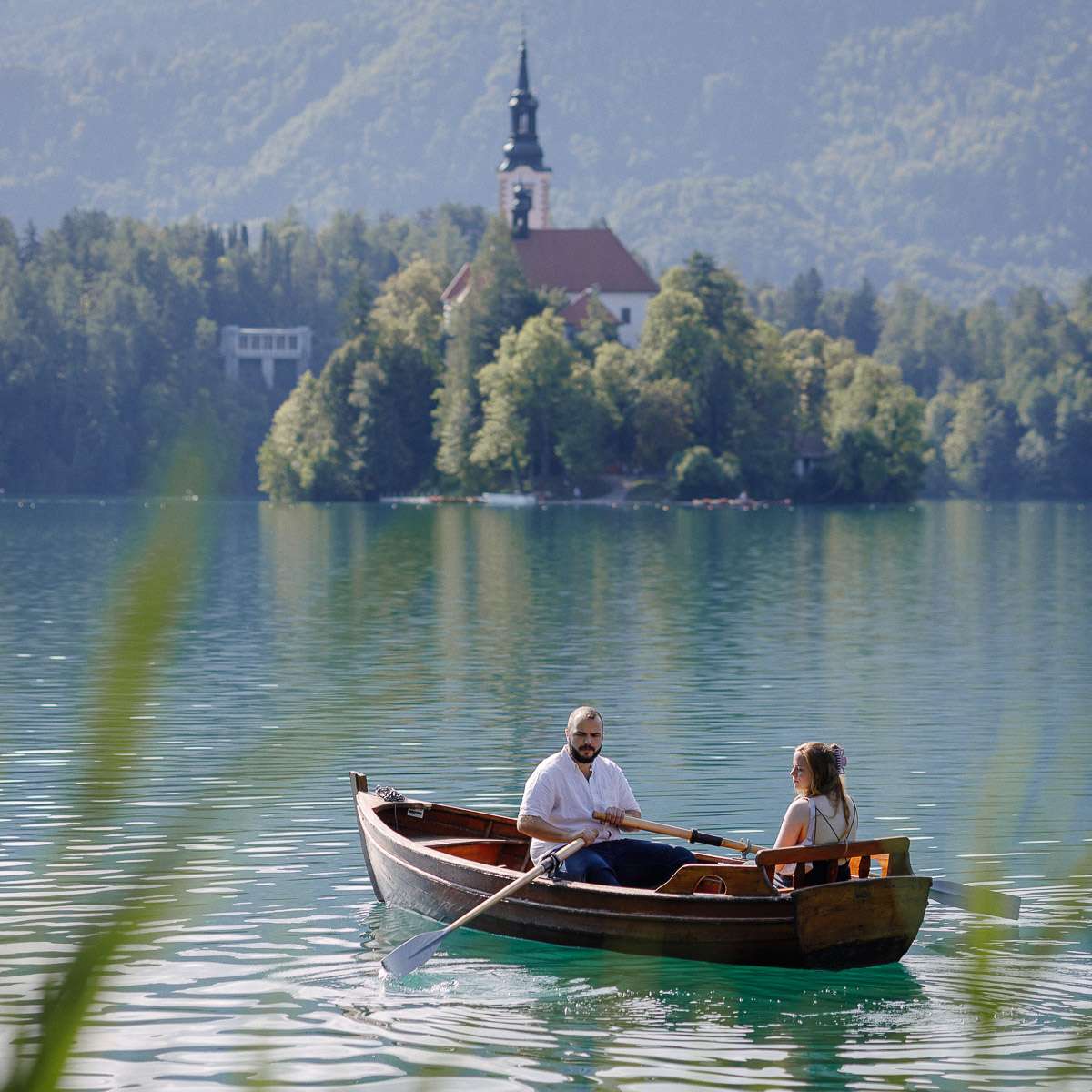
- —Private boat: intimate, quiet, and visually distinctive (see my guide to a private boat proposal at Lake Bled)
- —Viewpoints: dramatic, but require more effort and timing
Rather than choosing what is most famous, it helps to think about what fits your personalities, and how you want the moment to feel.
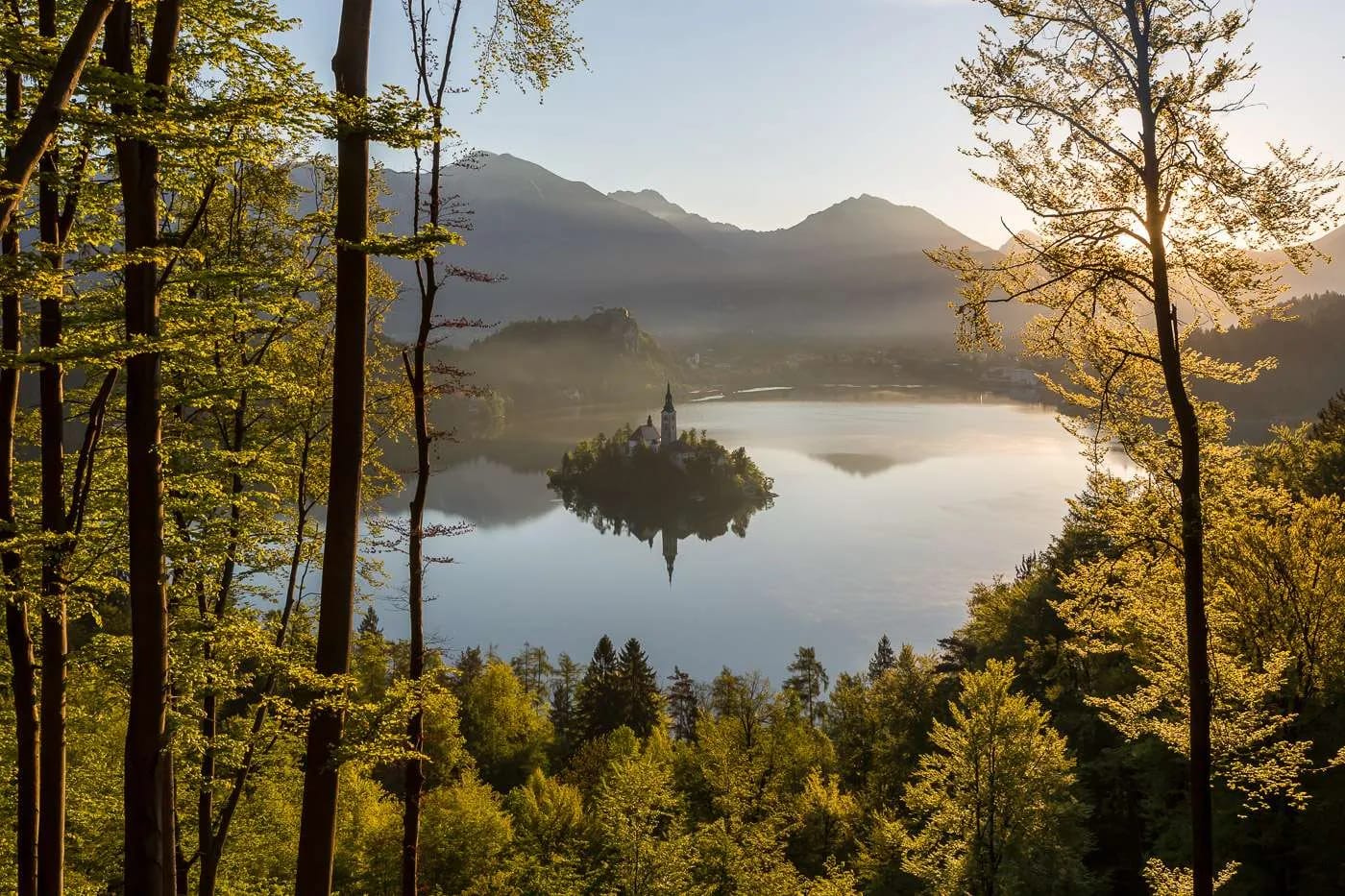
2. What is the best time of day for a proposal at Lake Bled?
Early morning is usually the calmest, with the softest light and the fewest people. Late afternoon is warmer and more atmospheric. Midday is the busiest and the least forgiving.
Light shapes not only how the proposal looks, but how it feels.
- —Morning often brings stillness, soft light, and fewer people
- —Late afternoon and evening feel warmer and more atmospheric
- —Midday can be bright, busy, and less forgiving visually
From my own mornings here, weekdays are the most peaceful. Until about nine o’clock, there are usually only a few walkers or runners on the path around the lake.
Also consider how timing connects to the rest of the day — whether you plan to celebrate immediately after, move to another location, or simply stay in the moment.
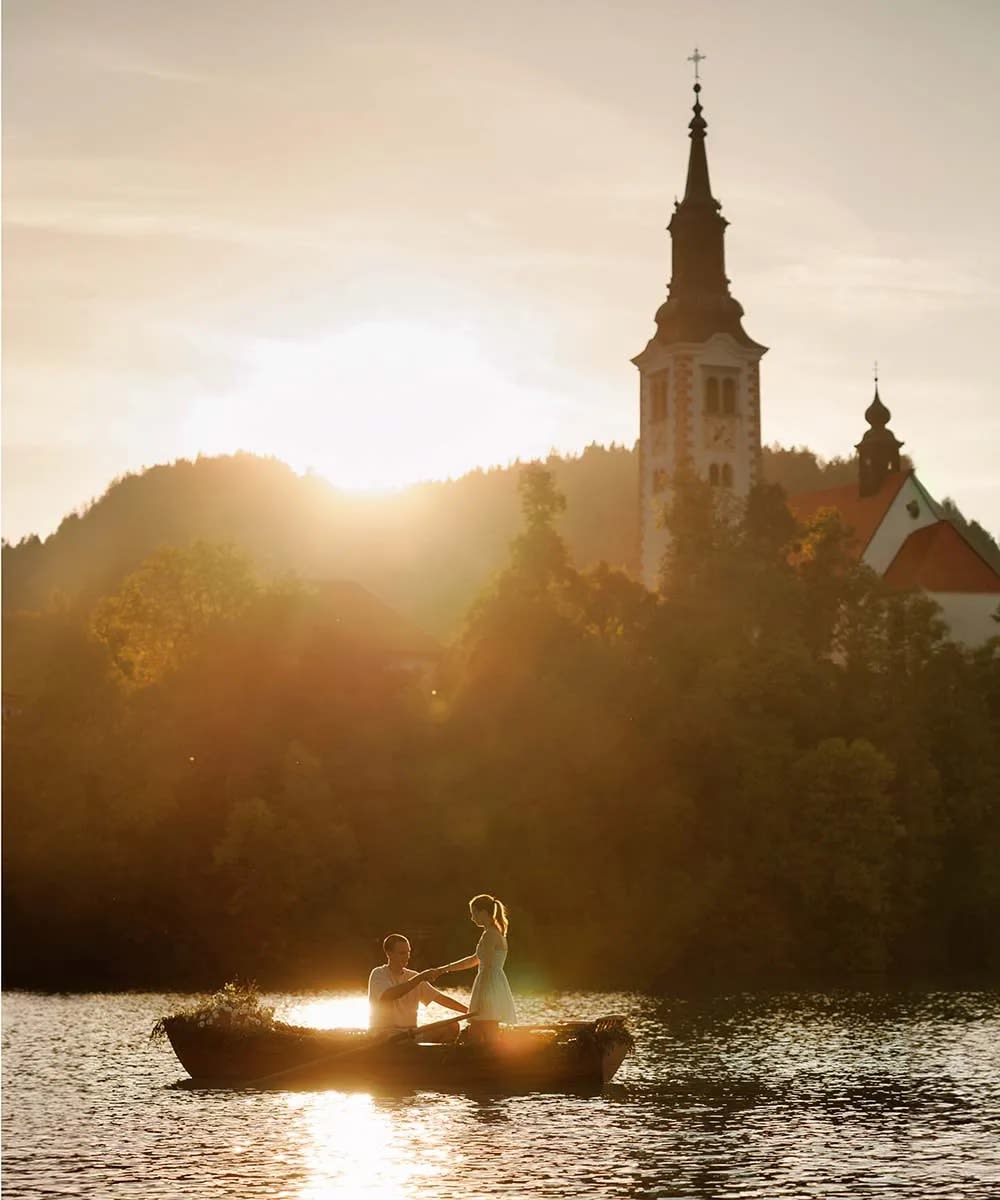
3. Should you have the proposal photographed?
That is a personal choice. If you do want it preserved, choose someone who knows the location and works unobtrusively, so the moment still unfolds naturally.
Some couples prefer to keep the proposal entirely private. Others value having the moment captured, especially in a place they may not return to.
A thoughtful approach to documentation can remain unobtrusive — allowing the proposal to unfold naturally while still preserving it.
If you are considering having the moment documented, it can also help to work with someone familiar with the location and its timing.
You can explore that here: Lake Bled proposal planner and photographer.
4. How do you keep the proposal a surprise?
Give your partner a simple, believable reason to be there.
A simple, natural reason for being in the location helps everything flow.
This might be:
- —a relaxed walk
- —a boat ride
- —visiting a viewpoint
- —heading to dinner
- —a casual day trip
The less constructed it feels, the easier it is for the moment to remain genuine.
5. Which personal touches are worth adding?
A small, meaningful detail or two, such as a handwritten note or a quiet toast, rather than a full setup.
Small details can deepen the experience — but restraint matters.
Consider:
- —a bouquet
- —a handwritten note
- —a quiet toast
- —a short piece of music
- —a meaningful location
One or two elements, chosen well, often feel stronger than a more elaborate setup.
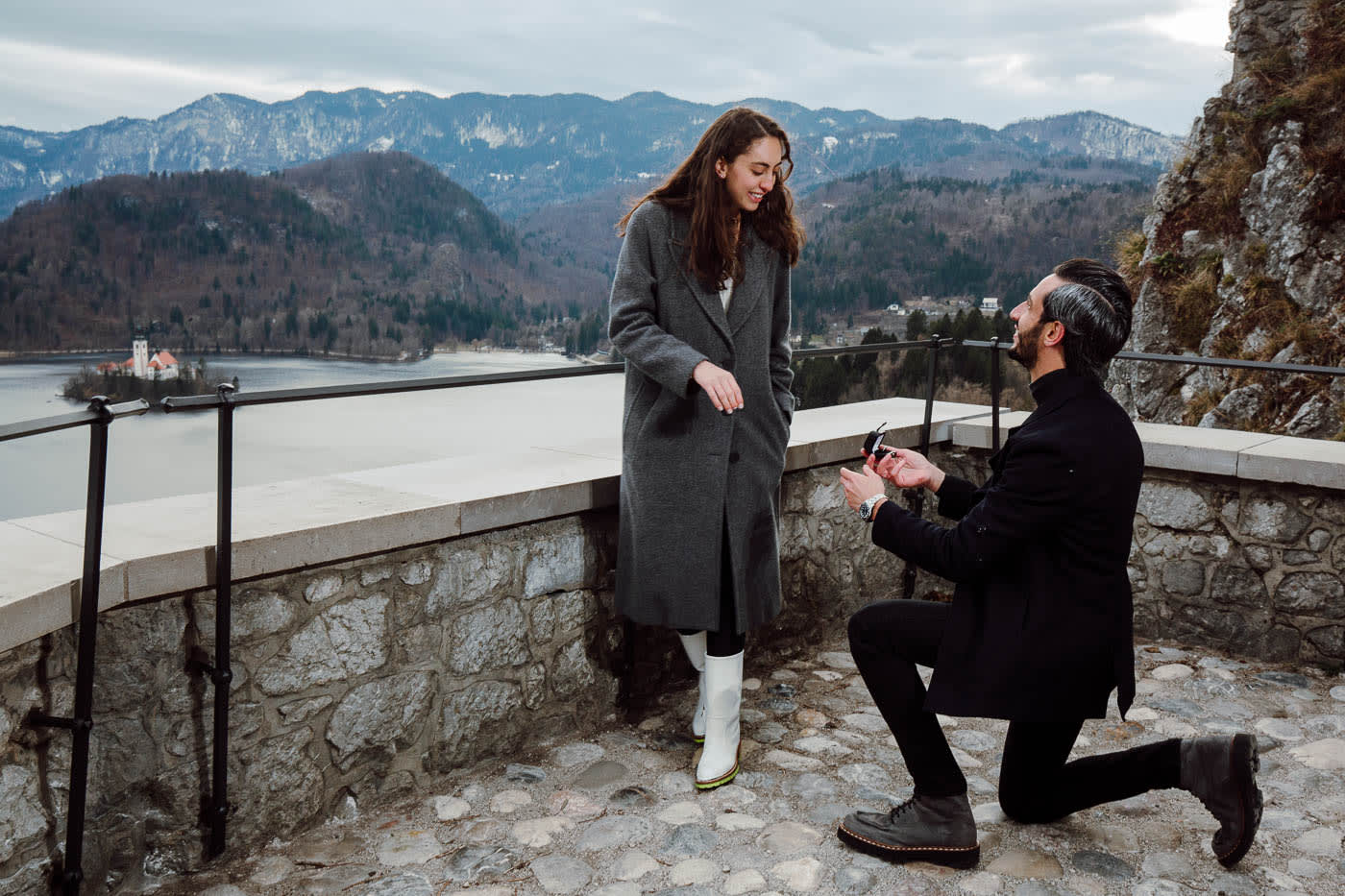
6. What logistics do you need to plan?
How you arrive, how long it takes, where you park or step off the boat, and how you carry the ring without it being noticed.
Practical details shape how relaxed the experience feels.
Think through:
- —how you will arrive
- —how long it takes
- —where you park or disembark
- —whether you need extra time
- —how to carry the ring discreetly
Planning this in advance removes small points of stress that can otherwise become noticeable.
7. What if the weather turns?
Have a second option ready before the day, so a change in the weather does not mean starting the plan again.
Conditions at Lake Bled can shift quickly.
A second option allows you to stay flexible without losing the feeling of the moment.
In many cases, slightly imperfect weather — mist, soft rain, or moving clouds — can create an even more atmospheric setting.
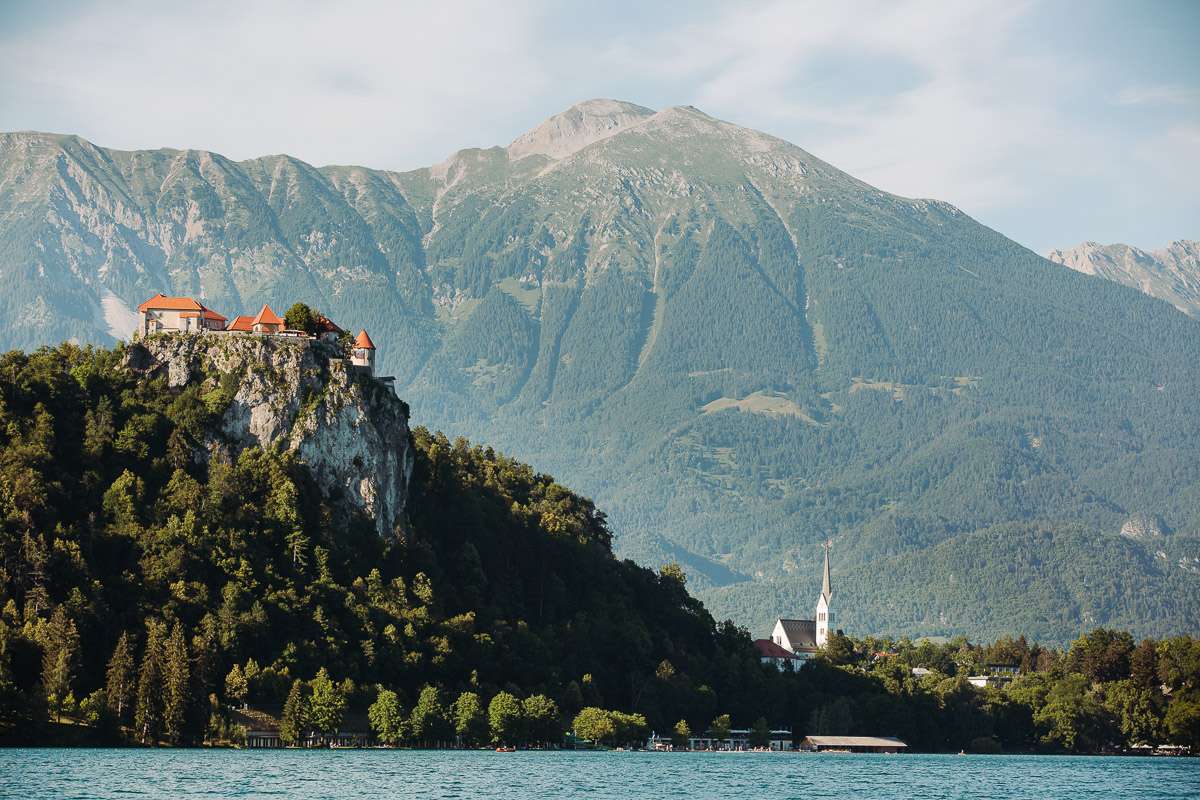
8. How do you balance privacy and scenery?
Decide which matters more to you, because the most iconic views are usually the most visible and the quietest places are usually less dramatic.
This is one of the most important decisions. There is no perfect answer, only a balance that fits your priorities:
- —privacy
- —accessibility
- —visual impact
- —comfort
- —flow of the day
Clarity here helps everything else fall into place.
9. How should you prepare yourself and the ring?
Keep it simple: know where the ring is, make sure you can reach it easily, and have a rough idea of what you want to say.
Think about:
- —where you will carry the ring
- —how easily you can reach it
- —whether you want to kneel
- —what you would like to say
You do not need a perfect speech. You need a moment that feels real.
10. What should happen after the yes?
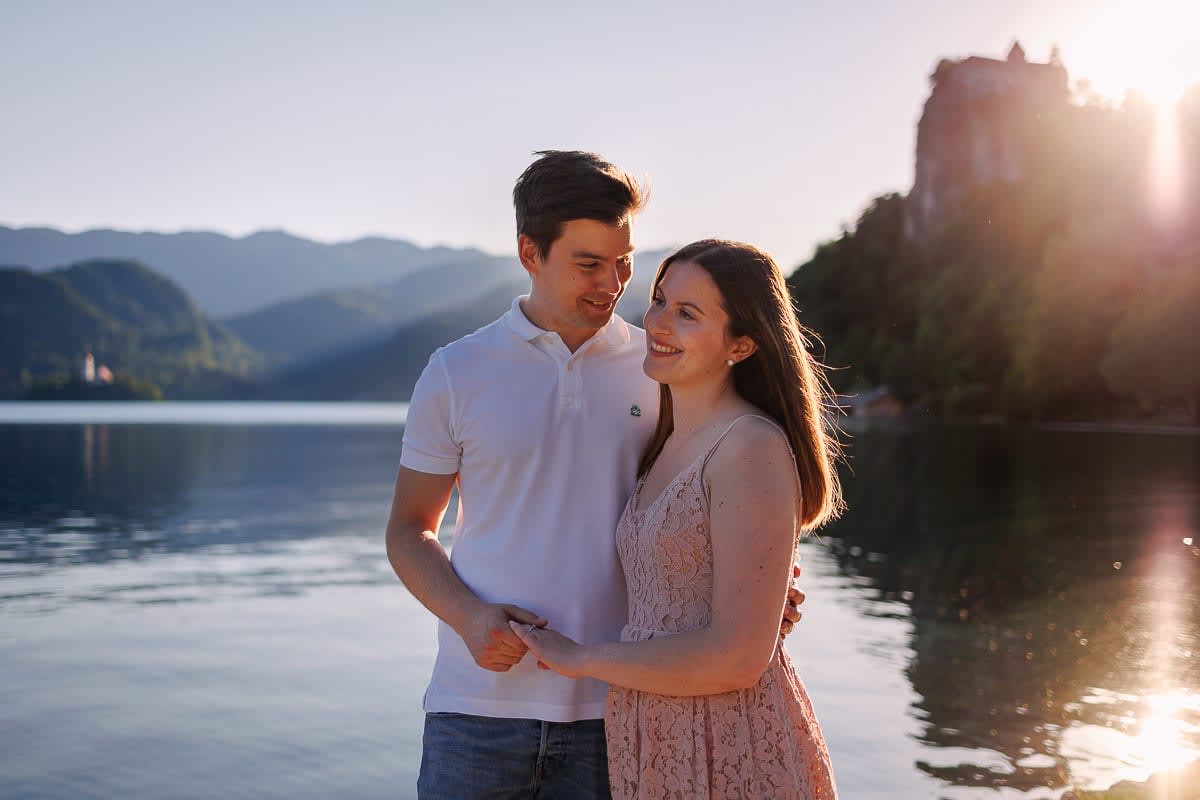
Leave room for it. What follows the proposal often shapes how the whole experience is remembered.
You might want:
- —a few quiet minutes together
- —relaxed portraits
- —a toast
- —a meal
- —a short walk or boat ride
- —time to call family and friends
Allowing space for this helps the moment settle naturally.
How much planning is actually needed?
Enough to remove distractions, not so much that the moment feels staged.
Some proposals are carefully structured. Others are intentionally simple.
In practice, most memorable proposals sit somewhere in between — prepared enough to feel smooth and effortless, but open enough to remain genuine.
The goal is not to control the moment.
It is to remove what might distract from it.
What are the most common mistakes when planning a Lake Bled proposal?
- —choosing a location only because it is well known
- —overlooking timing, light, or crowd patterns
- —underestimating transport and access
- —overcomplicating the setup
- —carrying the ring in an obvious way
- —leaving decisions too late
- —not thinking about what happens after
Avoiding these keeps the experience calm and focused on what matters.
Need help shaping the plan?
If you would like help refining the location, timing, and overall flow, or having the moment documented in a natural, unobtrusive way, you will find everything on my Lake Bled proposal planner and photographer page.