How Many Hours of Wedding Photography Do You Need at Lake Bled?
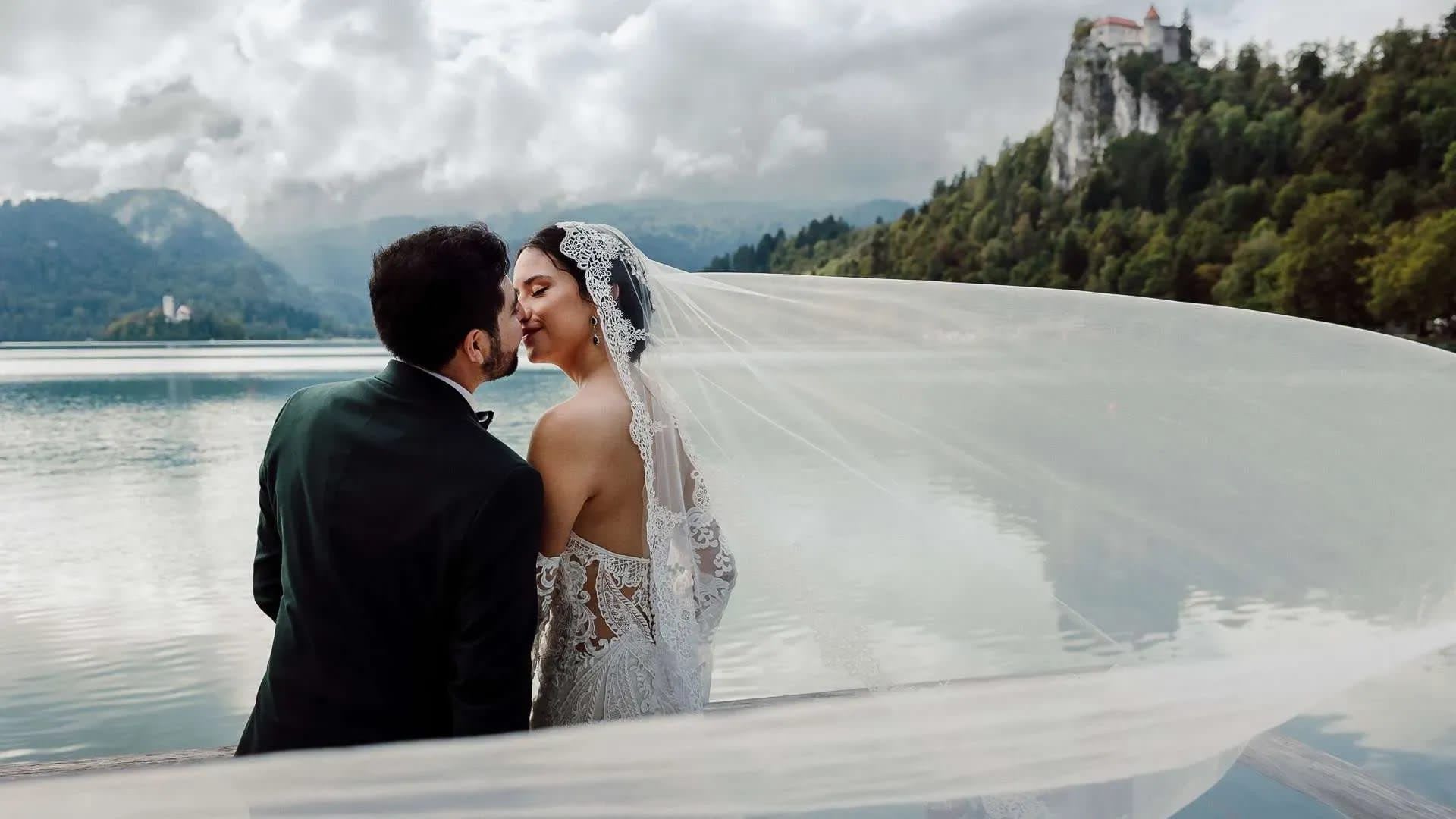
Choosing the right number of photography hours is not only a budgeting decision. It is a decision about pace.
The right coverage protects the experience, gives the day enough room to breathe, and allows the photographs to reflect the atmosphere of the wedding rather than the pressure of the schedule.
At Lake Bled, that difference is often felt more than couples expect.
Table of Contents:
Choosing coverage that fits the rhythm of your day
One of the most practical wedding photography decisions is also one of the easiest to underestimate:
How many hours do you actually need?
At Lake Bled, the answer depends on more than budget alone. It depends on the shape of your day, the number of locations involved, the pace you want to keep, and whether you want the experience to feel spacious or tightly timed.
Shorter coverage can work beautifully for intimate celebrations. Full-day coverage can create a very different sense of ease. The best choice is not always the longest one — but it should reflect the real rhythm of your wedding.
If you are still shaping the day itself, you may also find my How to Plan Wedding Photos at Lake Bled guide helpful.
Why this question matters more at Lake Bled than many couples expect
Lake Bled may look compact, but wedding days here often include more movement than couples first imagine.
A ceremony may take place at the castle, portraits by the lake, perhaps a boat transfer, perhaps dinner somewhere else. Even when distances seem short, transitions take time. Walking, gathering guests, stairs, parking, boat timing, and changing light all shape the day more than people expect on paper.
That is why coverage should not be chosen only by what sounds standard. It should be chosen by how much of the day you want documented — and how calmly you want it to unfold.

When 4 to 6 hours can work beautifully
Shorter coverage often suits:
- —intimate weddings
- —ceremony-focused celebrations
- —elopements
- —weddings with one main location
- —couples who care most about the ceremony, portraits, and key highlights
In these cases, 4 to 6 hours can be enough to tell the heart of the story without extending into every later part of the day.
A smaller wedding with a simple structure does not always need full-day coverage. If preparations are minimal, guest count is lower, and the focus is clear, shorter coverage can feel elegant, efficient, and entirely sufficient.
Shorter coverage works best when
- —the timeline is straightforward
- —movement between locations is limited
- —reception coverage is not a priority
- —you are happy to focus on the core moments rather than the full narrative arc
When 8 hours is the most balanced choice
For many couples, 8 hours is the natural middle ground.
It usually gives enough space to document the central story of the day without feeling overly extended. That often means some preparation coverage, the ceremony, portraits, family photographs, and a meaningful part of the reception.
At Lake Bled, 8 hours often works especially well when:
- —the ceremony and reception are relatively close
- —you would like some preparation photographs, but not necessarily the full morning
- —portraits matter, but the timeline is not highly layered
- —you want the day to feel well covered without moving into full-day territory
For many weddings, this is where practicality and storytelling meet well.
When full-day coverage makes the real difference
Full-day coverage becomes valuable when the day has more depth, more movement, or simply more parts you would genuinely like to remember.
That may include:
- —separate preparations
- —several locations
- —a boat transfer
- —portraits in more than one setting
- —speeches, dinner, and evening atmosphere
- —a celebration where the full story matters as much as the main events
The real luxury of full-day coverage is not only that more moments are included. It is that the day tends to feel less compressed. There is more room for portraits, more calm around transitions, and more freedom if something runs slightly late.
At Lake Bled, that breathing room often changes the experience just as much as the photographs.

The more locations you include, the more generous coverage should be
This is one of the most common planning mistakes.
If your day includes several meaningful places — perhaps a hotel, Bled Castle, the lakeshore, the island, and a separate reception venue — coverage usually needs more flexibility than couples first assume.
The challenge is not necessarily the distance itself. It is the accumulation of movement, coordination, and natural wedding-day rhythm. A multi-location day almost always needs more space than a single-venue one.
The more transitions your day includes, the less helpful a tightly measured schedule becomes.
A simple way to think about different coverage lengths
4 to 6 hours
Usually best for:
- —the ceremony
- —couple portraits
- —family photographs
- —a small number of key moments before or after
- —intimate celebrations with a simple structure
8 hours
Usually best for:
- —part of the preparations
- —the ceremony
- —portraits
- —group photographs
- —selected reception moments such as entrance, speeches, or first dance
Full-day coverage
Usually best for:
- —the full preparation story
- —ceremony and portraits without pressure
- —multiple locations
- —guest atmosphere throughout the day
- —evening celebrations
- —a fuller and more layered narrative
These are not strict rules, but they are usually a good starting point.

Why “just enough” time often feels tighter in real life
Wedding timelines rarely unfold exactly as they do on paper.
Hair and makeup may overrun. Guests may need gathering. Travel may take longer than expected. Portraits may need a few more minutes before everyone relaxes. The light may be best slightly later than planned.
That is why coverage that looks perfectly efficient can still feel rushed in practice.
The goal is not to book more hours than you need for the sake of it. It is to avoid shaping the day around pressure.
Questions worth asking yourselves
If you are deciding between shorter coverage and fuller storytelling, these questions usually help:
- —Do we want preparation photos?
- —Are we moving between more than one important location?
- —Are portraits an important part of the day for us?
- —Do we want some of the reception documented?
- —Do we want the timeline to feel calm rather than tightly managed?
- —Are there moments we would regret not having photographed?
The more often the answer is yes, the more likely it is that fuller coverage will feel worthwhile.
A useful rule of thumb
If your wedding is intimate, focused, and built around one main location, shorter coverage may be all you need.
If your day includes layered locations, several transitions, or a wish to let the story unfold with more ease, fuller coverage usually serves it better.
At Lake Bled especially, it is often not the ceremony itself that determines the right coverage length, but everything surrounding it.

A gentle next step
If you are currently deciding between shorter coverage and full-day storytelling, you can explore my wedding photography pricing page to see how my collections are structured.
And if you would like to see how this kind of coverage feels in practice, you are also welcome to explore my Lake Bled wedding photographer page.